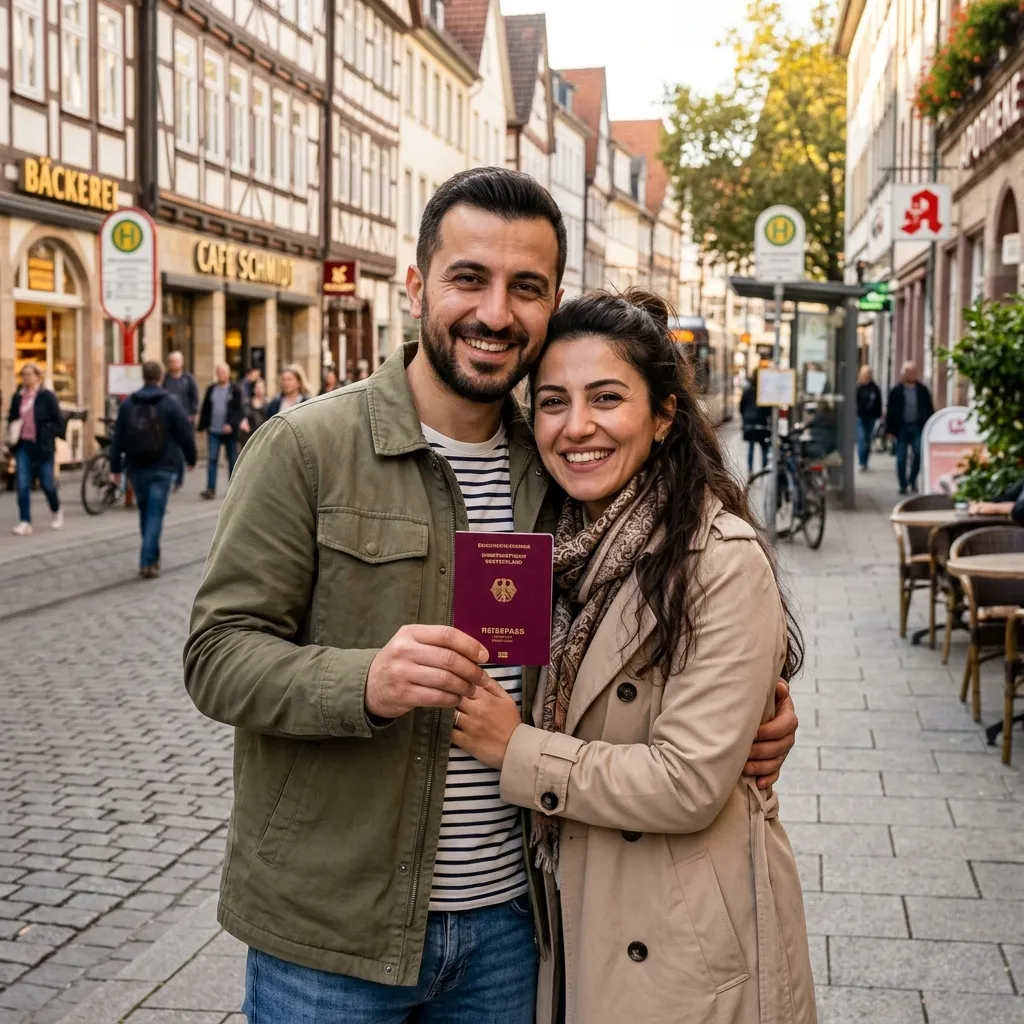
Naturalization after 5 Years – Prerequisites under StAG §10

Auf einen Blick
- ✓Die reguläre Aufenthaltszeit für die Einbürgerung in Deutschland beträgt seit der Reform 5 Jahre.
- ✓Der Lebensunterhalt muss für sich und Angehörige eigenständig ohne staatliche Unterstützung gesichert sein.
- ✓Ein Nachweis über ausreichende Deutschkenntnisse auf dem Niveau B1 ist zwingend erforderlich.
- ✓Der bestandene Einbürgerungstest (33 Fragen) muss dem Antrag beigefügt werden.
Information Status: Verified with StAG 2026 Reforms
Checked for compliance with the 2026 legal framework alterations.
The new Nationality Act has significantly shortened the standard period for naturalization in Germany. Instead of the previously required eight years of lawful residence, a habitual and lawful residence of five years is now sufficient (§ 10 paragraph 1 StAG). This reduction aims to quicken the path to full democratic participation and reward prompt social integration.
The shortening of the residency requirement is a core element of the modernization of German immigration law. It acknowledges that successful integration usually occurs well before eight years. The 5-year period applies uniformly to all foreign nationals holding a qualifying residence title. Periods of temporary permission (during asylum proceedings) or suspension of deportation (Duldung) generally do not count.
In addition to the minimum residence of 5 years, applicants must meet several other essential criteria. A major pillar is the independent livelihood requirement for themselves and their dependents (§ 10 paragraph 1 sentence 1 No. 3 StAG). Receiving Citizen's Benefit (Bürgergeld) or social assistance generally rules out naturalization, unless a statutory exception or hardship case applies.
Praxis-Check: Jetzt direkt prüfen
Prüfen Sie kostenlos Ihre Voraussetzungen zur Einbürgerung in unserem 3-Minuten-Assistenten.
Another central criterion is sufficient knowledge of the German language. The law requires proof of German skills at the B1 level of the Common European Framework of Reference for Languages. This can be proven by a language certificate such as the Deutsch-Test für Zuwanderer (DTZ). Exceptions only apply in cases of physical, mental, or age-related limitations, or for the Gastarbeiter generation.
Applicants must also demonstrate knowledge of the legal and social system and living conditions in Germany. This is typically done by passing the citizenship test ("Leben in Deutschland"), requiring at least 17 correct answers out of 33. Individuals with a German school-leaving certificate or a degree in political or legal sciences are exempt.
Furthermore, naturalization requires a clear commitment to the free democratic basic order of the Basic Law of the Federal Republic of Germany. The applicant must declare that they respect constitutional principles and do not support anti-constitutional activities. Recent reforms expand this to include acknowledging Germany's historical responsibility for national socialist injustice and protecting Jewish life.
A criminal record is a ground for exclusion (§ 12a StAG). Minor offenses and fines below a certain threshold (e.g., up to 90 daily rates) usually do not block naturalization. However, major crimes or convictions motivated by racist, xenophobic, or inhumane reasons lead to an absolute bar to citizenship.
In summary, naturalization after 5 years offers a modern perspective for immigrants. Those who have built a life in Germany, speak the language, and commit to the values of our Basic Law can now obtain full citizenship rights much faster. It is advisable to review prerequisites early and gather the required documents in good time.
Frequently Asked Questions (FAQ)
Do student years count toward the 5-year minimum residency?
Yes, residency for study purposes (§ 16b AufenthG) is fully counted as lawful residence toward the 5-year requirement in most German federal states.
Can I naturalize while receiving Citizen's Benefit?
Generally, no. Receiving Citizen's Benefit excludes naturalization. Exceptions exist for full-time workers who have been employed for at least 20 of the last 24 months.
Which language certificate is required for naturalization?
You need a certificate proving German skills at B1 level, such as the Deutsch-Test für Zuwanderer (DTZ) or an equivalent TELC or Goethe certificate.
Legal Notice
Disclaimer / Liability Protection: PassKlar is an automated, AI-driven educational platform providing generalized summaries of public legal frameworks (StAG). It does not provide legally binding legal advice under the German Rechtsdienstleistungsgesetz (RDG). For individual legal assessments, always consult a certified immigration attorney (Fachanwalt für Migrationsrecht) or your local Ausländerbehörde.