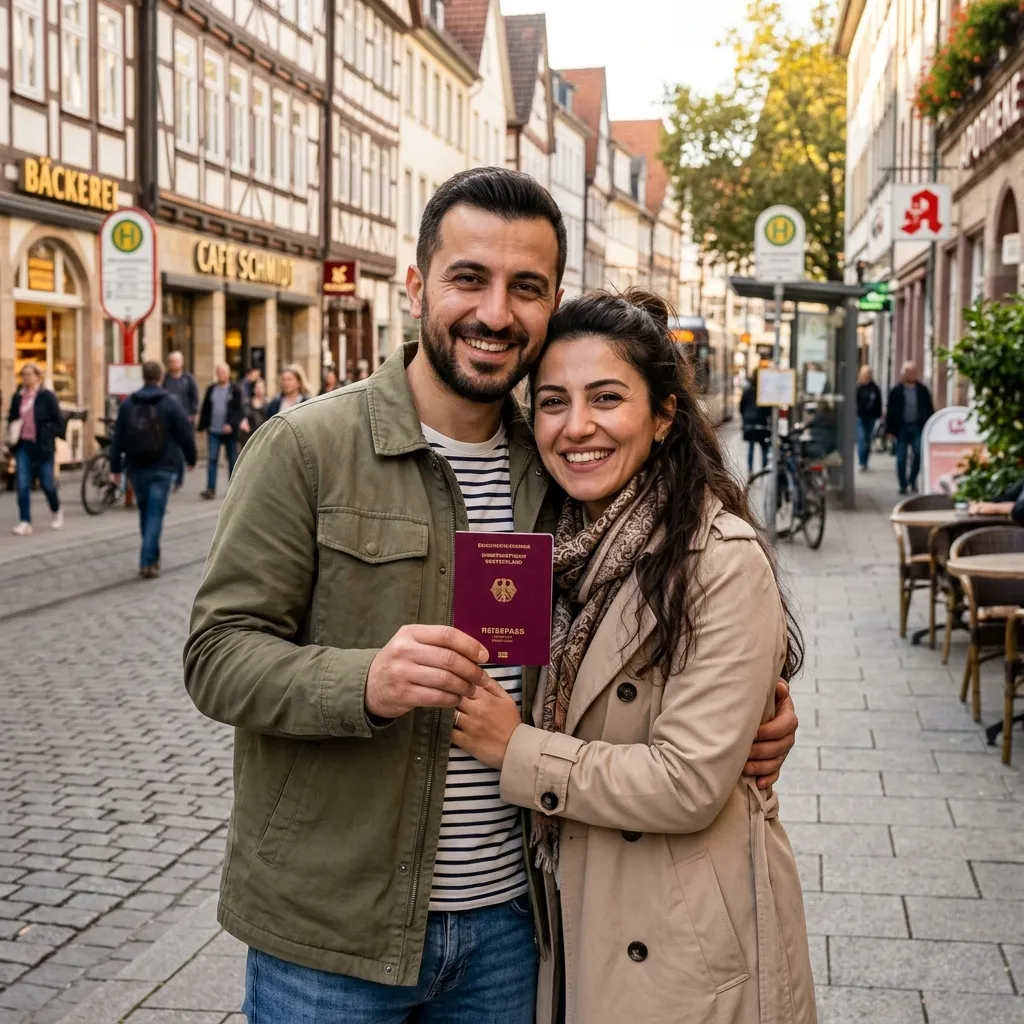
Dual Citizenship in Germany 2026 – All Regulations

Auf einen Blick
- ✓Seit der Reform des Staatsangehörigkeitsgesetzes 2024 ist die doppelte Staatsbürgerschaft in Deutschland generell zulässig.
- ✓Bewerber müssen ihre bisherige Staatsbürgerschaft bei der Einbürgerung nicht mehr aufgeben.
- ✓Ausländische Staaten können jedoch eigene Regeln zum Verlust der Staatsbürgerschaft bei Annahme einer anderen haben (z.B. Ukraine).
- ✓Mehrstaatigkeit gilt für alle Herkunftsländer gleichermaßen und erfordert keine gesonderte Beibehaltungsgenehmigung mehr.
Information Status: Verified with StAG 2026 Reforms
Checked for compliance with the 2026 legal framework alterations.
The introduction of unrestricted dual citizenship marks a historic shift in German nationality law (§ 10 StAG). For decades, the principle of avoiding multiple nationalities was a cornerstone of German migration policy. Immigrants from non-EU countries generally had to renounce their original citizenship to obtain a German passport. This caused millions of long-term residents to forego naturalization for emotional or legal reasons.
Since the comprehensive reform of the Nationality Act (StAG) took effect in summer 2024, with its administrative processes fully established by 2026, the requirement to renounce previous citizenship has been completely abolished. Germany now generally permits multiple nationalities. Any applicant meeting the other naturalization criteria can keep their foreign citizenship without needing to prove special hardship.
The legal foundation for this paradigm shift is the reformed § 10 paragraph 1 sentence 1 No. 4 StAG. Previously, it stated that applicants must give up or lose their foreign citizenship. This condition has been removed entirely. Equally important is the mirror rule for German citizens acquiring foreign citizenship: the previously required retention permit (Beibehaltungsgenehmigung) has been abolished. Germans who take up foreign citizenship no longer automatically lose their German passport.
Praxis-Check: Jetzt direkt prüfen
Prüfen Sie kostenlos Ihre Voraussetzungen zur Einbürgerung in unserem 3-Minuten-Assistenten.
This transition offers major practical and emotional benefits. Many immigrants feared losing inheritance, property, or residency rights in their home countries if they renounced their citizenship. Furthermore, citizenship represents a deep connection to one's roots. The new law eliminates these concerns entirely, leading to a surge in applications across Germany.
For administrative offices, the change simplifies operations because time-consuming checks for exceptions and hardship cases are no longer necessary. Previously, complex investigations were conducted to prove that renouncing citizenship would cause unreasonable costs or was denied by the home country. These bureaucratic hurdles are now gone.
Despite the general permission for dual citizenship, applicants must still meet all other strict criteria. These include a minimum of five years of lawful residence, financial self-sufficiency, proof of B1 German skills, passing the citizenship test, and declaring commitment to the free democratic basic order of the Basic Law.
It is crucial to note that while German law fully permits dual citizenship, the law of the country of origin might not. Some states automatically strip citizens of their nationality if they adopt another. Applicants should consult the consulates of their home countries beforehand to understand the legal outcomes.
Overall, dual citizenship strengthens social participation and integration. It acknowledges that people can hold identities and allegiances to more than one country without conflicting with their loyalty and commitment to the Federal Republic of Germany.
Frequently Asked Questions (FAQ)
Do I have to give up my old citizenship to become German?
No, under the reformed StAG 2026, you can generally keep your original nationality. Germany no longer requires you to renounce it.
Does dual citizenship apply to all countries of origin?
From the German legal perspective, yes. However, you must check if your home country enforces an automatic loss of citizenship when you acquire a foreign one.
Do I lose my German citizenship if I naturalize abroad?
No. The retention permit has been abolished. You can acquire a foreign citizenship and automatically keep your German passport.
Legal Notice
Disclaimer / Liability Protection: PassKlar is an automated, AI-driven educational platform providing generalized summaries of public legal frameworks (StAG). It does not provide legally binding legal advice under the German Rechtsdienstleistungsgesetz (RDG). For individual legal assessments, always consult a certified immigration attorney (Fachanwalt für Migrationsrecht) or your local Ausländerbehörde.